How to Convert a Recipe to Urdu Accurately
By the Recipia team · · 6 min read
If you want to convert a recipe to Urdu so a parent, grandparent, or friend can actually cook from it, a straight word-for-word translation often falls short. A recipe is a set of instructions, not a paragraph of prose. Ingredient names, measurements, and cooking terms all carry meaning that a generic translator can mangle. And because Urdu is written right-to-left, the text can display in ways that make numbers and steps confusing.
This guide walks through how to translate a recipe into Urdu accurately, what commonly goes wrong, and how to check your result so it reads naturally in the kitchen.
Why translating a recipe is harder than translating a sentence
A recipe mixes several kinds of information that each need different handling:
- Ingredient names, which often have well-known local equivalents
- Quantities and units, which must stay precise
- Cooking actions, like sauté, fold, simmer, or blanch
- Timing and temperature, where a wrong number ruins the dish
A generic translator treats all of this as ordinary text. It may translate "a pinch of salt" literally, turn "cup" into an unrelated word, or misread "1/2" when the surrounding text flips direction. The result can look fluent but instruct the cook incorrectly.
The goal is not the most literary Urdu. It is Urdu that a home cook reads once and knows exactly what to do.
Get the ingredient names right
Ingredient names are where most recipe translations go wrong, because everyday Urdu often keeps its own common words rather than a direct translation of the English.
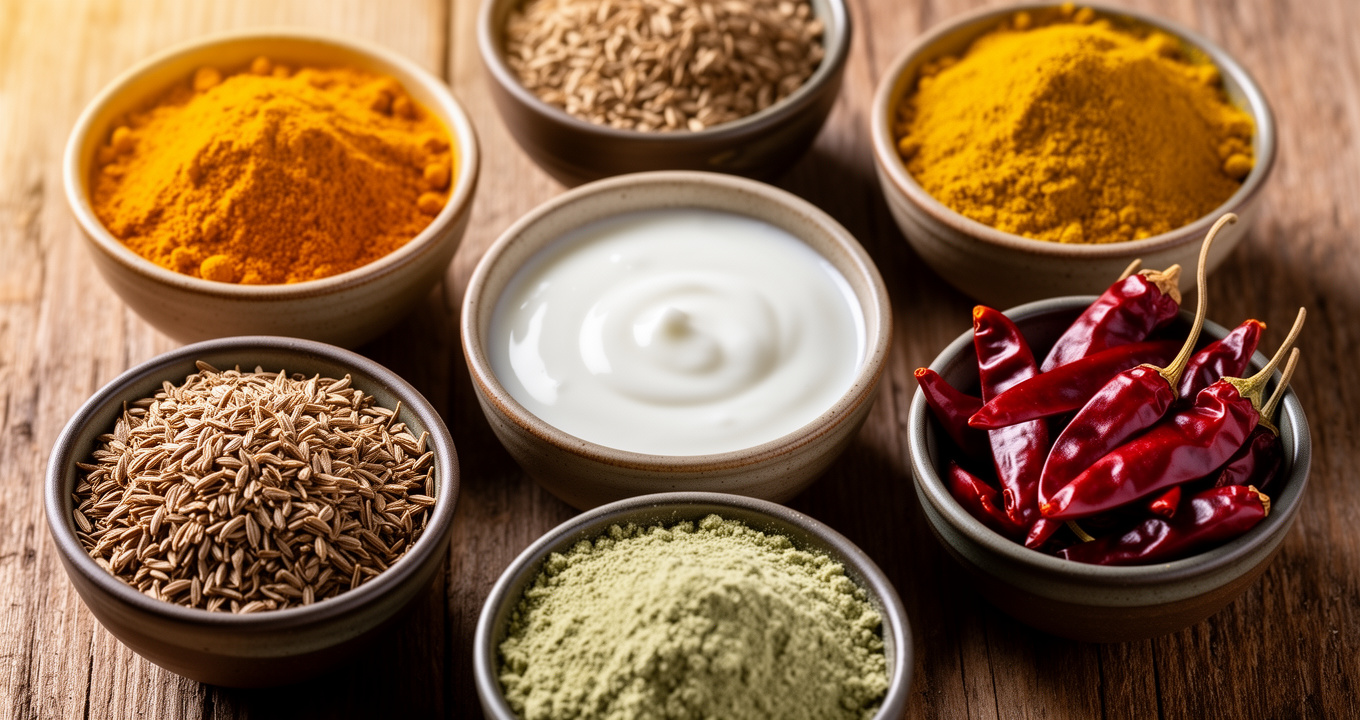
Many spices and staples have familiar names cooks already use. Reaching for these makes the recipe instantly readable:
| English | Common Urdu equivalent |
|---|---|
| Coriander | Dhania (دھنیا) |
| Cumin | Zeera (زیرہ) |
| Turmeric | Haldi (ہلدی) |
| Yogurt | Dahi (دہی) |
| Flour (wheat) | Aata (آٹا) |
| Clarified butter | Ghee (گھی) |
| Chickpeas | Chana (چنا) |
| Lentils | Daal (دال) |
A few practical rules:
- Prefer the word cooks actually say. Many Urdu speakers use "ghee" and "dahi" naturally, so a literal translation can feel foreign.
- Keep brand-neutral descriptions. Translate "all-purpose flour" as the type of flour, not a product name.
- Watch ambiguous words. "Chili" can mean fresh green chilies or dried red chili powder. Say which one.
- Note regional differences. Some vegetables and herbs have more than one common name; pick the one your reader will recognize.
When in doubt, keep the English name in parentheses next to the Urdu. A cook who shops from labels in English will thank you.
Handle units and quantities carefully
Measurements are the part you cannot afford to get wrong.
- Keep numerals unambiguous. Urdu can be written with Western digits (1, 2, 3) or Eastern Arabic-Indic digits (۱، ۲، ۳). Pick one style and use it throughout so fractions and ranges stay clear.
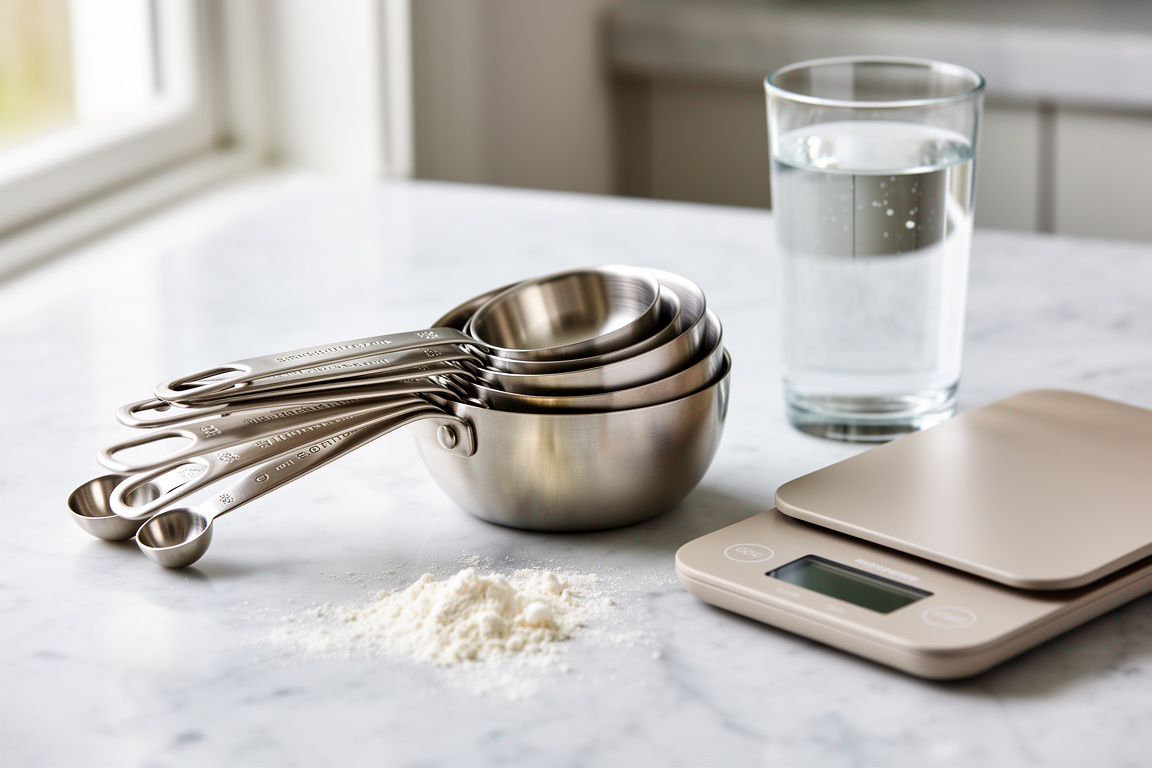
- Decide on a measurement system. If your reader cooks by weight in grams, don't leave amounts in cups. If they use cups and spoons, keep those. Converting halfway is worse than not converting at all.
- Spell out small measures. Teaspoon and tablespoon are easy to confuse when abbreviated. Write them in full in Urdu.
- Protect temperatures and times. "180°C" and "20 minutes" should survive translation exactly. Check them in the final text.
A quick reference for common conversions, in case you need to switch systems:
- 1 cup water ≈ 240 ml
- 1 tablespoon ≈ 15 ml
- 1 teaspoon ≈ 5 ml
- 1 cup flour ≈ 120 g (varies with how it's scooped)
- 1 stick butter ≈ 113 g
Weights for volume measures are approximate because ingredients pack differently, so weigh when precision matters, especially in baking.
Get right-to-left text to display correctly
Urdu reads right-to-left, and this is where copy-pasting into a generic translator most often breaks.
Common right-to-left problems:
- Numbers and units scatter. A line like "cook for 2 to 3 minutes" can reorder so the numbers land in the wrong place.
- Mixed English and Urdu misaligns. When you keep an English ingredient name inside an Urdu line, the two scripts can appear in the wrong order.
- Punctuation jumps. Brackets, slashes in fractions, and colons can flip to the opposite side.
- Lists lose their shape. Numbered steps may not stay in order visually even when the text is correct.
To avoid this:
- Use a tool or editor that supports proper right-to-left rendering, not just one that converts the words.
- Keep each step on its own line so ordering stays clear.
- Read the final version out loud in Urdu. If a step is hard to follow by ear, it will be hard to follow at the stove.
The pitfalls of copy-pasting into a generic translator
A general-purpose translator is built for sentences, not for structured recipes. Pasting a whole recipe in usually creates a few predictable problems:
- Lost structure. Ingredient lists and numbered steps get flattened into one block, so it's hard to tell what's an ingredient and what's an instruction.
- Literal cooking terms. "Fold in the egg whites" or "rest the dough" can translate word-for-word into something that makes no cooking sense.
- Broken measurements. Fractions, ranges, and units are exactly the parts most likely to reorder or drop.
- No serving logic. If you also want to double the recipe, you have to redo every amount by hand, and translation errors multiply.
None of this means machine translation is useless. It means the recipe needs to be understood as a recipe first, then translated, then displayed with correct right-to-left formatting.
A cleaner way to convert a recipe to Urdu
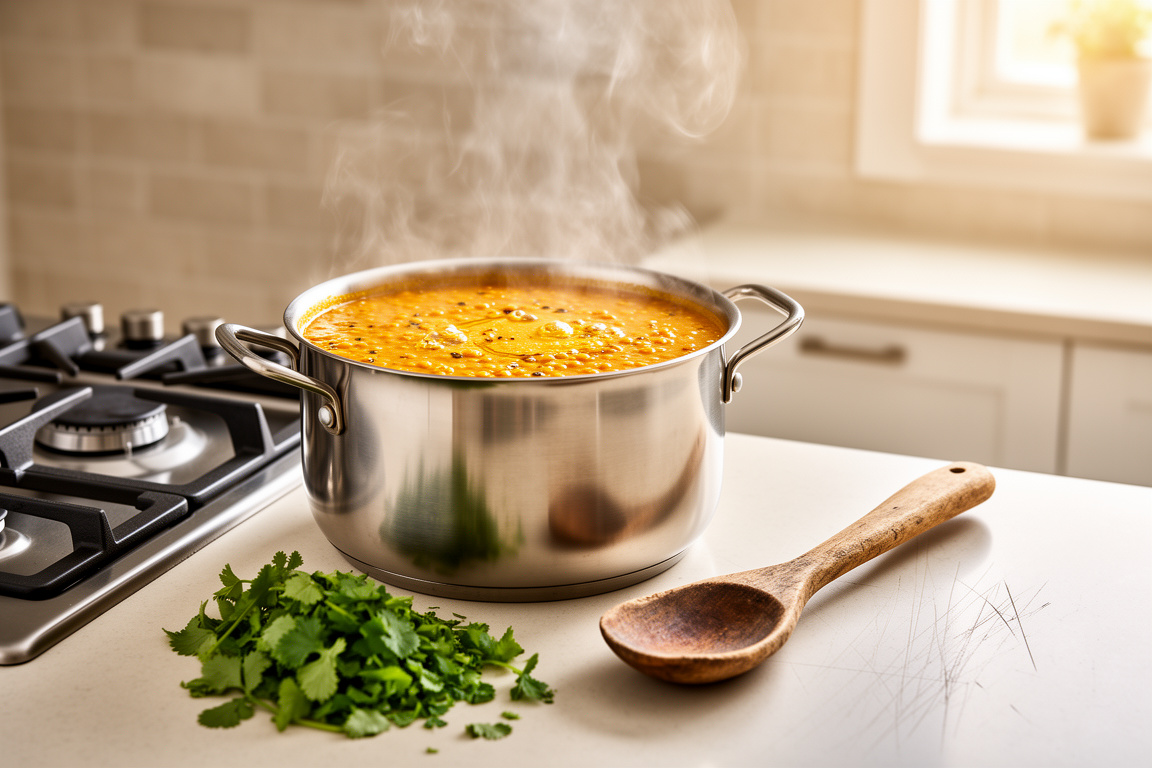
This is where a recipe-aware tool helps. Recipia reads a recipe first, separating ingredients with their amounts from the numbered steps, and then translates it into Urdu with proper right-to-left display. Because it understands the structure, units and step order stay intact instead of collapsing into a block of text.
You can start from a recipe link, paste the recipe text, or upload a photo of a cookbook page, a printed card, or a handwritten note, and get a structured recipe. From there you can translate into Urdu, or into any of 15 languages including Arabic, Hindi, Bengali, Spanish, and more. Arabic and Urdu are shown right-to-left the way they should be.
A few extra touches make the translated recipe easier to cook from:
- Scale the servings and every ingredient amount is recalculated, so you translate once and adjust freely.
- Simplify the steps for a beginner cook if the original instructions are dense.
- Guided cook mode shows one step at a time and starts a timer for steps that mention a time, which is handy when you're reading in a second language.
Nutrition estimates, where shown, are approximate and vary with ingredients and portions, so treat them as a guide rather than exact figures. For any health condition or specific dietary need, check with a qualified professional.
A short checklist before you share it
Before you send the Urdu recipe to whoever will cook from it, run through this:
- Do the ingredient names match what your reader actually calls them?
- Are units consistent, and did temperatures and times survive intact?
- Does the right-to-left text read cleanly, with numbers in the right place?
- Are the steps still in order, one action per line?
- Read it aloud once. Does each step make sense at the stove?
Get these five right and your translated recipe will work in the kitchen, not just on the page.
Try it in Recipia
Turn any recipe into clean, right-to-left Urdu, keep the amounts and steps intact, and scale servings in a click. Try Recipia free.
Frequently asked questions
Can I keep English ingredient names in an Urdu recipe?
Yes, and it often helps. Many cooks shop from English labels, so adding the English name in parentheses next to the Urdu term keeps the recipe readable at both the market and the stove.
Why do numbers and fractions get jumbled when I translate into Urdu?
Urdu is written right-to-left, so numerals, ranges, and fractions can reorder if the tool doesn't render right-to-left text properly. Use an editor or tool that supports right-to-left display, and keep each step on its own line.
Should I convert cups to grams when translating a recipe to Urdu?
Only if your reader cooks by weight. Pick one system and use it throughout; converting halfway causes errors. Volume-to-weight conversions are approximate because ingredients pack differently, so weigh when precision matters.
What languages can Recipia translate a recipe into?
Recipia translates recipes into 15 languages: English, Urdu, Arabic, Spanish, Hindi, French, Portuguese, Turkish, Indonesian, Mandarin Chinese, Italian, German, Bengali, Japanese, and Korean. Arabic and Urdu display right-to-left properly.
Can I start from a photo of a handwritten recipe?
Yes. You can upload a photo of a handwritten note, printed card, or cookbook page, and Recipia will turn it into a structured recipe with ingredients and numbered steps that you can then translate.