How to Use a Recipe Nutrition Calculator by Hand
By the Recipia team · · 7 min read
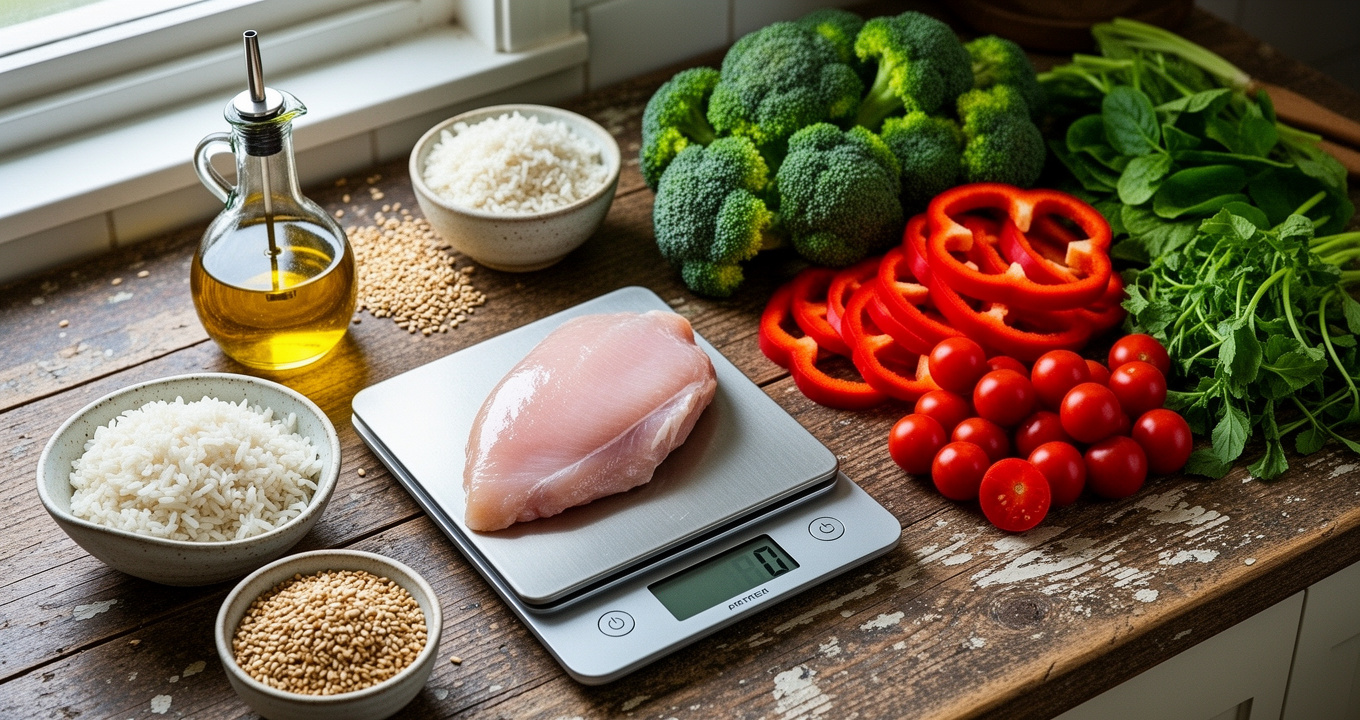
Cooking at home gives you control over what goes on your plate, but it leaves one question open: how many calories and grams of protein, carbs and fat are actually in a serving? A recipe nutrition calculator answers that by adding up every ingredient and dividing by the number of servings. You can do the same math by hand, and understanding how it works helps you trust the numbers, and know when to treat them with caution.
This guide walks through the full method step by step, shows a worked example, and explains why every result, whether from an app or your own spreadsheet, is an estimate rather than a lab value.
What a recipe nutrition calculator actually does
At its core, the process is simple arithmetic:
- Break the recipe into individual ingredients with amounts.
- Look up the calories and macros for each ingredient at that amount.
- Add everything together to get totals for the whole dish.
- Divide each total by the number of servings.
That is the entire method. A calculator just automates the lookups and the math. When you do it by hand you follow the exact same four steps, so the logic never changes, only the effort.
The macros worth tracking are protein, carbohydrate and fat. As a rule of thumb, protein and carbohydrate each provide roughly 4 calories per gram, and fat provides roughly 9 calories per gram. These are standard reference values used across nutrition labelling, so they make a useful sanity check on your totals.
Why per serving matters
Calories for a whole tray of lasagne are close to meaningless when you eat one square. The per-serving figure is what you actually plan meals around, so the number of servings you choose is one of the most important inputs. Cut the same dish into six portions instead of four and every per-serving number drops by a third.
Step one: list every ingredient with a real amount
Vague amounts produce vague results. "A drizzle of oil" or "a handful of cheese" can swing a per-serving figure by a hundred calories or more, because fats and hard cheeses are calorie-dense.
Convert everything to a measurable amount before you start:
- Weigh solids in grams or ounces where you can. Weight is far more accurate than volume for things like flour, meat and cheese.
- Note liquids in millilitres or cups.
- Count items that come in units, such as two eggs or one medium banana.
- Do not forget cooking fats, oils, dressings, sauces and anything added at the table.
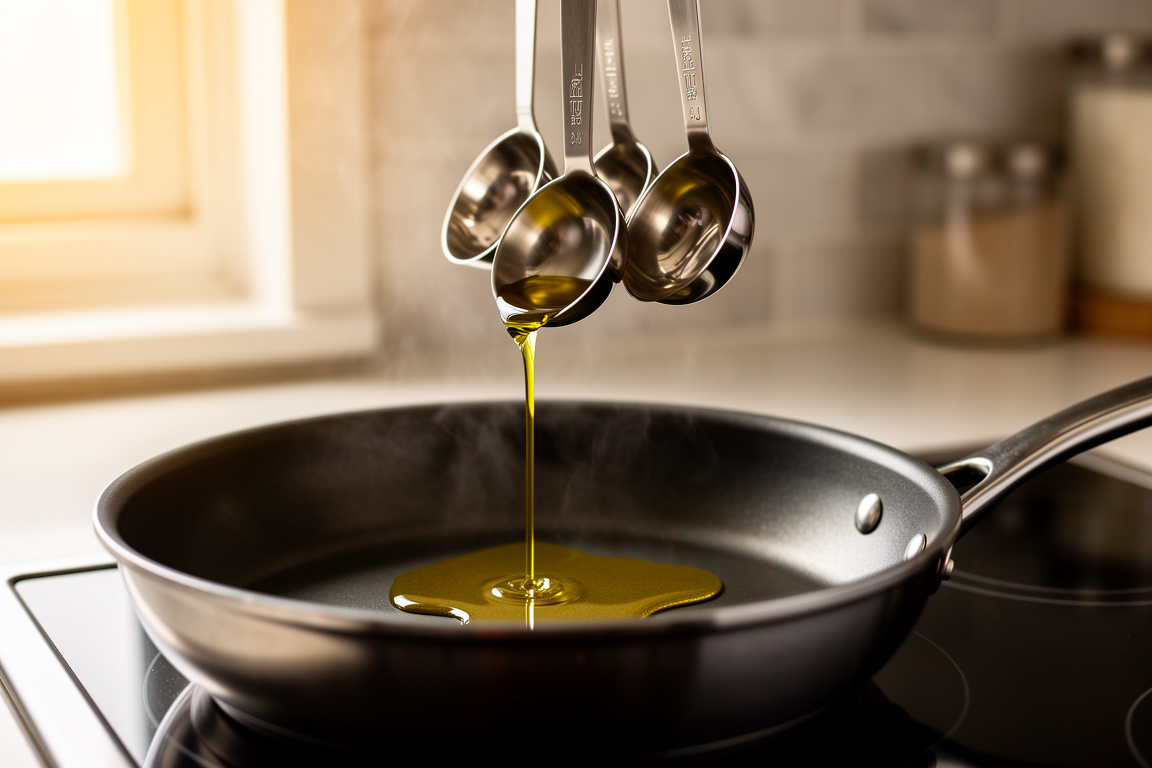
Oil in the pan is the single most commonly missed ingredient. A tablespoon of any cooking oil adds roughly 120 calories, so leaving it out quietly understates the whole dish.
Step two: find calories and macros for each ingredient
For each ingredient, you need four numbers at your specific amount: calories, protein, carbs and fat. There are a few reliable places to look:
- The nutrition panel on the packaging, which lists values per 100 g or per serving.
- A national food composition database, which many governments publish free online.
- Generic entries in a trusted nutrition reference for whole foods like raw chicken breast or dry rice.
The catch is that panels and databases usually give values per 100 g or per standard portion, not per the amount your recipe uses. So you scale.
If 100 g of cooked white rice is about 130 calories and your recipe uses 300 g, multiply: 130 × 3 = 390 calories. Do the same for each macro. Repeat that for every ingredient and you will have a small table of numbers.
Step three: add up the totals and divide
Once each ingredient has its four numbers, sum each column to get the totals for the entire dish. Then divide each total by the number of servings.
Here is a simplified example for a basic chicken and rice bowl serving four. The figures are approximate and rounded to show the method, not exact values for your ingredients.
| Ingredient | Calories | Protein (g) | Carbs (g) | Fat (g) |
|---|---|---|---|---|
| 600 g chicken breast | 990 | 186 | 0 | 21 |
| 300 g cooked rice | 390 | 8 | 84 | 1 |
| 2 tbsp olive oil | 240 | 0 | 0 | 27 |
| Vegetables and seasoning | 120 | 5 | 24 | 1 |
| Total (whole dish) | 1,740 | 199 | 108 | 50 |
| Per serving (÷ 4) | 435 | 50 | 27 | 13 |
A quick sanity check: multiply the macros by their calorie values. Protein 199 × 4 = 796, carbs 108 × 4 = 432, fat 50 × 9 = 450. That adds to 1,678, which is close to the 1,740 total. Small gaps like this are normal and come from rounding and from fibre and other components. If your check is wildly off, you have probably made a data-entry error somewhere.
A shortcut worth knowing
If you cook the same base dish often but change the portion size, you do not need to redo everything. Calculate the whole-dish totals once, then simply divide by whatever number of servings you cut it into that day.
Why the results are always estimates
This is the part most people skip, and it matters. Even a careful calculation gives you an approximation, not a lab-tested value. The reasons are built into food itself:
- Natural variation. Two chicken breasts of the same weight can differ in fat content. Produce varies in sugar and water content with ripeness and season.
- Brand differences. One brand of pasta sauce can have twice the sugar of another. Database averages smooth over these gaps.
- Cooking changes things. Roasting renders out fat, boiling leaches some nutrients into water, and food loses water weight as it cooks, which concentrates calories per gram.
- Measuring error. Cups packed loosely or tightly, "one medium onion" covering a wide range of sizes, and oil left in the pan all add up.
- Absorbed versus added fat. When you fry and drain, some of the oil stays in the pan, so counting all of it overstates the total.
Because of all this, treat per-serving numbers as a reasonable guide, typically within a sensible range rather than an exact figure. That is enough for planning meals, comparing recipes and tracking trends over weeks. It is not precise enough to manage a medical condition. If you have a health condition or specific dietary needs, check with a doctor or registered dietitian rather than relying on any calculator.
How to make your estimates more reliable
You cannot remove the uncertainty, but you can shrink it:
- Weigh ingredients instead of using cups where accuracy matters.
- Include every fat, sauce and topping, even small ones.
- Use the actual product panel when you know the brand, rather than a generic average.
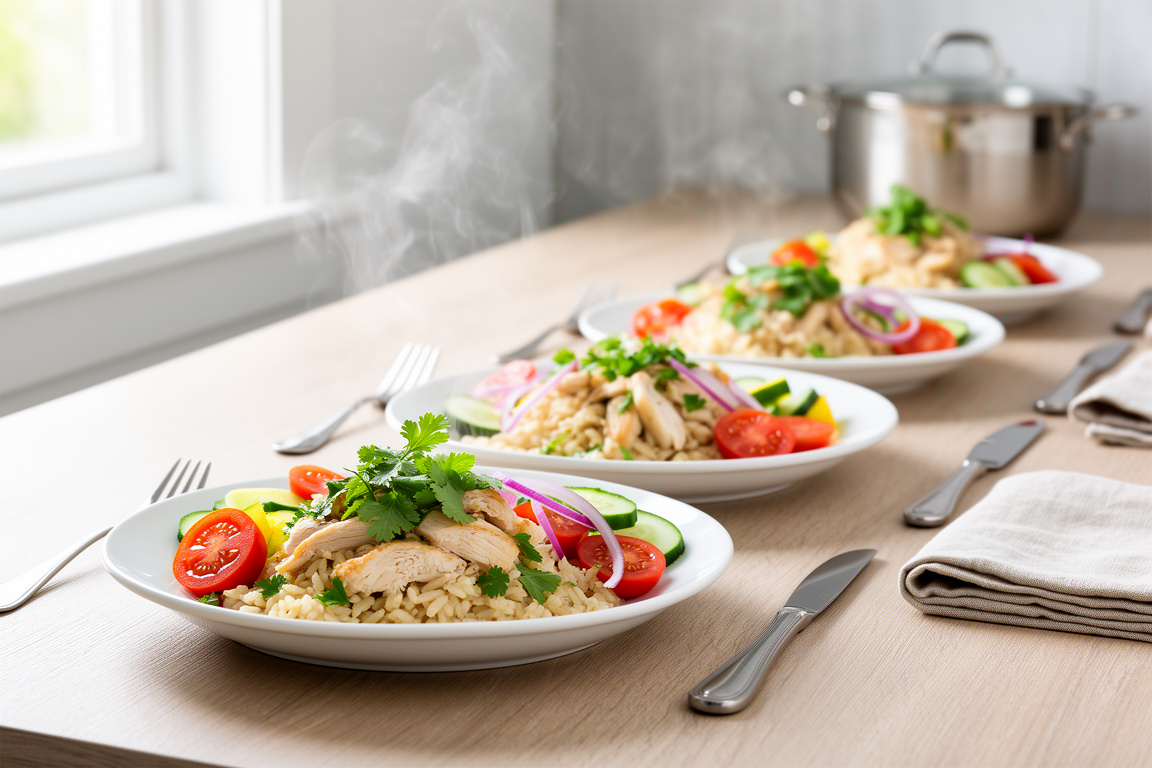
- Be honest about serving sizes. Weigh the finished dish, then divide by the number of portions for a consistent per-serving weight.
- Recalculate when you change an ingredient. Swapping full-fat for low-fat, or adding cheese, shifts the fat and calorie numbers noticeably.
Where software saves time
Doing this by hand is educational, but it is slow when you have a full week of meals to plan. This is where a tool helps. Recipia shows estimated calories and macros, protein, carbs and fat, per serving for recipes, and when you change the number of servings every ingredient amount is scaled for you, so the per-serving math updates without a spreadsheet.
Because the underlying method is still summing ingredients and dividing, the same caution applies: the figures are estimates, not lab-tested values. A good tool is transparent about that, and lets you adjust servings so the per-serving numbers reflect how you actually eat.
A quick recap of the method
- List every ingredient with a specific, measurable amount.
- Look up calories, protein, carbs and fat for each at that amount.
- Add each column for whole-dish totals.
- Divide by servings for per-serving values.
- Sanity-check with 4/4/9 calories per gram.
- Treat the result as a well-reasoned estimate, not a lab value.
Once you have done this a few times, you will start to recognise which ingredients drive the numbers, oils, cheeses, nuts and sugars, and you can adjust a recipe before you even cook it.
Try it in Recipia
Want the ingredient math done for you, with estimated calories and macros per serving and servings you can scale? Try Recipia free and turn any recipe into something you can cook from and plan around.
Frequently asked questions
How do I calculate calories for a recipe by hand?
List every ingredient with a measurable amount, look up its calories at that amount, add them all together for a whole-dish total, then divide by the number of servings to get calories per serving.
Why are recipe nutrition calculator results only estimates?
Ingredients vary naturally by ripeness, cut and brand, cooking changes water and fat content, and measuring is never exact. These factors mean any calculation is a reasonable approximation rather than a lab-tested value.
How do I work out macros from calories?
Protein and carbohydrate each provide roughly 4 calories per gram and fat provides roughly 9 calories per gram. You can multiply your macro grams by these values as a sanity check against your calorie total.
What is the most commonly forgotten ingredient in nutrition math?
Cooking oil is the most overlooked. A single tablespoon adds roughly 120 calories, so leaving out pan oils, dressings and toppings can significantly understate a dish's totals.
Are homemade nutrition estimates accurate enough for a medical diet?
They are fine for general meal planning and comparing recipes, but not precise enough to manage a medical condition. For specific health needs, consult a doctor or registered dietitian.