Macro Friendly Recipes With Calories: Simple Swaps
By the Recipia team · · 6 min read
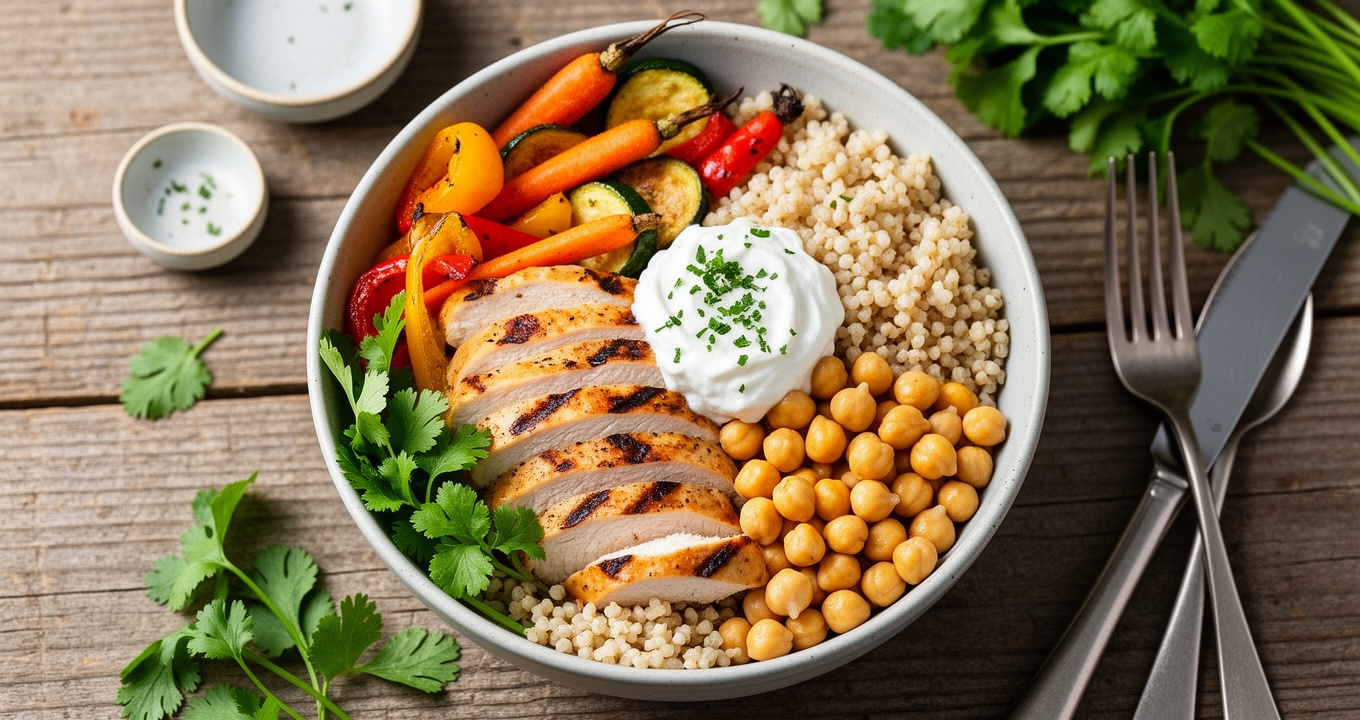
Hitting a protein target while staying inside a calorie budget does not mean eating plain chicken and rice every day. The real skill is learning to read a recipe, spot where the calories hide, and make a few swaps that keep the flavor. That is what macro friendly recipes with calories are really about: everyday food, adjusted on purpose so the numbers work for your goal.
This guide walks through how to choose recipes worth adapting, the swaps that change the macros most, and how to track each serving against a daily target without turning dinner into a spreadsheet.
What "macro friendly" actually means
A macro friendly meal is one where the balance of protein, carbs, and fat fits the goal you are chasing, at a calorie count you can fit into your day. There is no single correct ratio. Someone building muscle wants more protein and more total calories; someone in a fat-loss phase wants high protein to stay full while keeping calories lower.
A few anchors help:
- Protein and carbs each provide roughly 4 calories per gram.
- Fat provides roughly 9 calories per gram, so it moves the calorie total fastest.
- Protein is the macro most people under-eat, and it is the one that keeps you full and protects muscle while dieting.
Because fat is so calorie-dense, cooking oil, cheese, cream, and dressings are usually where a "healthy" recipe quietly doubles its calories. That is good news: it means small, targeted swaps give you big results without gutting the flavor.
Pick recipes that are easy to bend
Not every recipe is worth adapting. The best candidates have a clear protein source and a sauce or fat component you can adjust. Think stir-fries, grain bowls, tacos, pasta bakes, curries, and sheet-pan dinners. These forgive substitutions.
Harder to adapt are baked goods and emulsions where fat and sugar are structural. You can lighten them, but the texture changes, so set expectations before you start.
Simple swaps that change the macros, not the flavor
The goal is to raise protein, trim excess fat, and keep enough flavor that you actually want to eat the meal again. These swaps do that.
Boost protein:
- Stir in Greek yogurt or low-fat cottage cheese instead of sour cream or mayo.
- Add a drained can of beans, lentils, or chickpeas to soups, sauces, and bowls.
- Choose leaner cuts (chicken breast, 93% lean ground meat, loin cuts) when the recipe hides them in sauce anyway.
- Fold extra egg whites into scrambles, fried rice, or baked oats.
Trim fat without losing taste:
- Measure cooking oil with a spoon instead of pouring; one tablespoon of oil is roughly 120 calories.
- Use a lower-fat cheese, or use a sharp cheese and simply use less, because flavor comes through at smaller amounts.
- Swap cream for evaporated milk or a yogurt-and-cornstarch mix in creamy sauces.
- Bake, air-fry, or pan-sear instead of deep-frying.
Keep carbs working for you:
- Blend half cauliflower or extra vegetables into mashed potatoes, rice, or pasta dishes to lower calorie density per serving.
- Keep whole grains for fiber, which helps you feel full on the same calories.
Protect the flavor:
- Replace fat with acid, heat, and aromatics: lemon, vinegar, chili, garlic, herbs, and spices add zero meaningful calories.
- Toast spices and brown your protein properly. Flavor built by technique costs no macros.
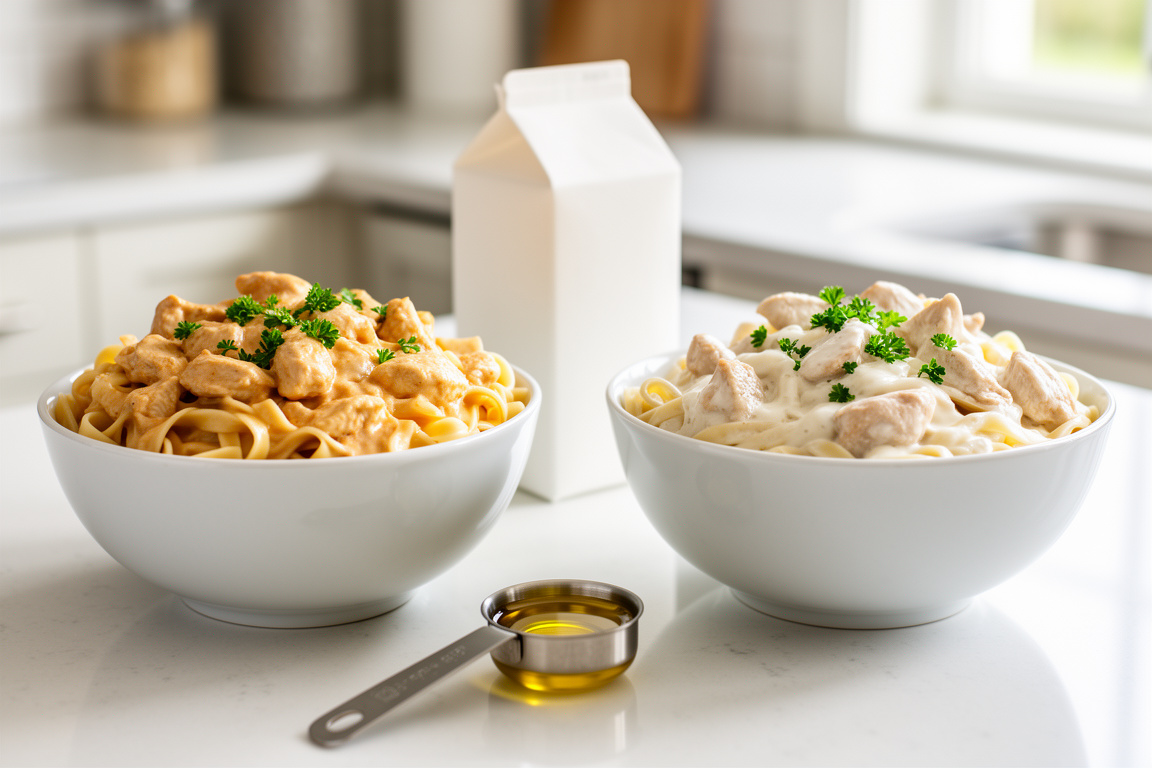
A quick before-and-after
Here is how a few swaps add up on a single creamy chicken pasta serving. Numbers are approximate and depend on brands and portions.
| Component | Original | Swapped |
|---|---|---|
| Sauce base | Heavy cream | Evaporated milk + yogurt |
| Protein | Thigh, skin on | Chicken breast |
| Cheese | Full-fat, heavy hand | Sharp cheese, lighter hand |
| Oil | Poured | One measured tablespoon |
Changes like these can shift a serving from fat-heavy toward protein-forward while cutting a few hundred calories, without removing a single thing that makes the dish taste good.
Know the calories per serving before you cook
Swaps only help if you can see what they do. The problem is that most recipes online give you a wall of ingredients and no numbers, or a single calorie figure with no macro breakdown.
You can work it out by hand: look up each ingredient's calories and macros, add them up, and divide by the number of servings. It is accurate if your ingredient data is good, and it teaches you where calories live. If you want the full method, see How to Use a Recipe Nutrition Calculator by Hand.
For speed, a tool that estimates nutrition from the ingredient list saves the lookups. In Recipia, once you have a recipe saved, calories and macros per serving are shown for you, and if you change the number of servings every ingredient amount scales with it, so the per-serving numbers stay honest when you cook for one or for six.
One caveat matters: any recipe nutrition figure is an estimate. It varies with the exact brands you buy, how much fat renders off during cooking, and how precisely you portion the final dish. Treat the numbers as a close guide, not a lab result.
Why per-serving beats "whole recipe"
A dish that looks heavy as a full tray can be perfectly reasonable per portion. The reverse is also true: a small bowl of something rich can cost more than you think. Always judge by the serving you will actually eat, and portion the cooked dish into those servings before you sit down.
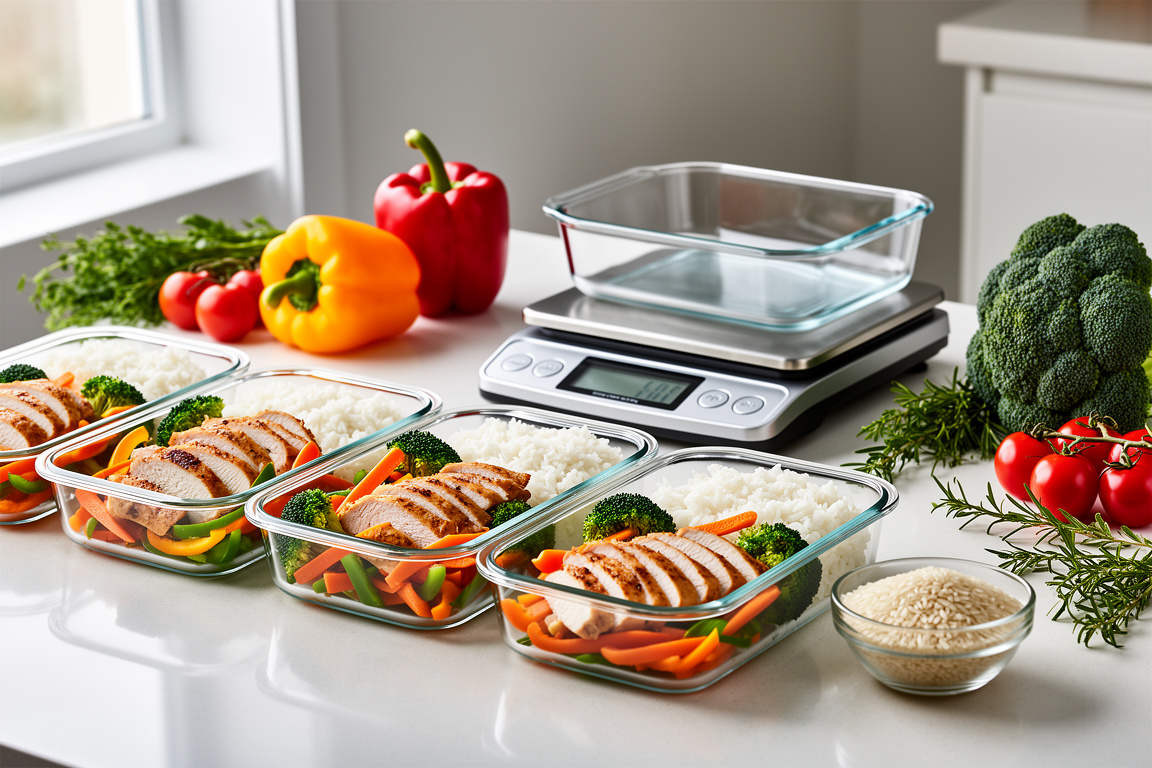
Log each meal against a daily budget
Individual swaps are tactics. A daily calorie and protein target is the strategy that ties them together.
Start with a rough daily calorie budget based on your age, weight, height, activity level, and goal, then set a protein target. A common starting point is a protein intake that supports your activity, spread across your meals so no single meal has to carry it all. For a personal target tied to a health condition, check with a doctor or registered dietitian first, since general guidance cannot account for your individual needs.
Then the routine is simple:
- Plan meals that roughly fit the day, front-loading protein so it is easy to hit.
- Log each meal as you eat it and subtract from the budget.
- Adjust the last meal of the day to close any gap, a little more rice if you are under, a lighter sauce if you are over.
Recipia calculates a daily calorie budget from those same details and lets you log meals against it, so the per-serving numbers from your recipes flow straight into the day's running total. If you plan a week at a time, a goal-based weekly meal plan generator can rough out the days around a calorie target before you start swapping.
Build a small library you can reuse
The fastest way to eat well on macros is to keep ten to fifteen meals you know the numbers for and rotate them. Save the versions you have already adapted so you are not recalculating every week. Keeping your recipes from different websites in one place means your tested, macro-friendly versions are a click away instead of scattered across tabs.
A simple weekly rhythm
- Choose: pick three or four adaptable recipes with a clear protein source.
- Swap: apply one protein boost and one fat trim to each.
- Check: read the calories and macros per serving before cooking.
- Portion: divide the cooked dish into real servings.
- Log: track each meal against your daily budget and adjust the last meal to fit.
Repeat that loop and the guesswork disappears. You end up with food you look forward to that also happens to land on your numbers.
Try it in Recipia
Paste or search a recipe, see the calories and macros per serving, scale the servings, and log the meal against your daily budget, all in one place. Try Recipia free and turn your everyday meals into macro friendly ones.
Frequently asked questions
How much protein should a macro friendly meal have?
There is no single number, but spreading your daily protein target evenly across meals makes it easier to hit. A meal built around a lean protein source plus beans or dairy usually covers a solid share of the day.
Are recipe calorie and macro estimates accurate?
They are close guides, not exact figures. Totals vary with the specific brands you buy, how much fat cooks off, and how precisely you portion the finished dish, so treat them as approximate.
What single swap cuts the most calories?
Measuring cooking oil instead of pouring it, and reducing cream or full-fat cheese. Fat carries roughly 9 calories per gram, so trimming it moves the calorie total faster than anything else.
How do I keep low-calorie food from tasting bland?
Replace fat with acid, heat, and aromatics such as lemon, vinegar, chili, garlic, herbs, and spices, and build flavor through browning and toasting spices. These add flavor without meaningful calories.
Can I adapt any recipe to be macro friendly?
Dishes with a clear protein source and an adjustable sauce, like stir-fries, bowls, curries, and sheet-pan dinners, adapt easily. Baked goods are harder because fat and sugar affect their structure and texture.