How a Weekly Meal Plan Generator Saves Your Week
By the Recipia team · · 6 min read
Planning a full week of meals sounds simple until you sit down to do it. You want food you actually like, meals that fit a calorie target, ingredients that do not rot in the fridge, and a shopping list that does not send you back to the store twice. A weekly meal plan generator takes most of that friction away, but it works best when you understand the thinking behind a good plan first.
This guide walks through how to build a week of meals around a goal, how to balance your days, how to reuse ingredients so nothing goes to waste, and how to prep ahead. Then it shows where a tool can do the heavy lifting.
Start with a goal and a calorie target
Every useful meal plan starts with a reason. Are you trying to lose weight, gain muscle, maintain where you are, or just eat more consistently during a busy week? Your goal decides your calorie target, and your calorie target shapes everything else.
A rough daily calorie budget depends on your age, weight, height, activity level and goal. These numbers are personal and only ever approximate, because the formulas behind them are estimates and real bodies vary. If you have a health condition or a specific medical goal, check with a doctor or registered dietitian before building a plan around hard numbers.
Once you have a daily target, break it into meals. A common split is:
- Breakfast: roughly 25 percent of daily calories
- Lunch: roughly 30 to 35 percent
- Dinner: roughly 30 to 35 percent
- Snacks: whatever is left, often 10 to 15 percent
These percentages are flexible. Someone who trains in the morning might want a bigger breakfast; someone who eats late might shift more to dinner. The point is to have a frame before you pick a single recipe.
Why macros matter, not just calories
Two meals with the same calories can feel very different. Protein keeps you full and supports muscle; fiber-rich carbs steady your energy; fat adds flavor and satisfaction. For most goals, aiming for a solid protein source at every meal is the single most useful rule. You do not need to track every gram, but knowing the protein, carbs and fat per serving helps you adjust. If you want to understand where those estimates come from, this walkthrough on using a recipe nutrition calculator by hand is a good primer.
Balance the days so the week is doable
A plan that looks perfect on paper falls apart if every dinner takes an hour. Balance effort the way you balance calories.
- Mix fast and slow. Pair a 15-minute dinner with a slower weekend cook. Not every meal needs to be a project.
- Repeat on purpose. Eating the same breakfast three days in a row is not boring, it is efficient. Pick one or two breakfasts and lunches you are happy to repeat.
- Leave a gap. Plan six dinners, not seven. One night will always go sideways, and a planned leftover night or takeout keeps the plan honest.
- Match the day's energy. Put the easiest meals on your busiest days.
Reuse ingredients to cut waste and cost
The fastest way to blow a food budget and fill your bin is to buy a dozen ingredients that each appear in only one meal. The fix is to build the week around a shared core.
Pick a few base ingredients and let them show up in different forms:
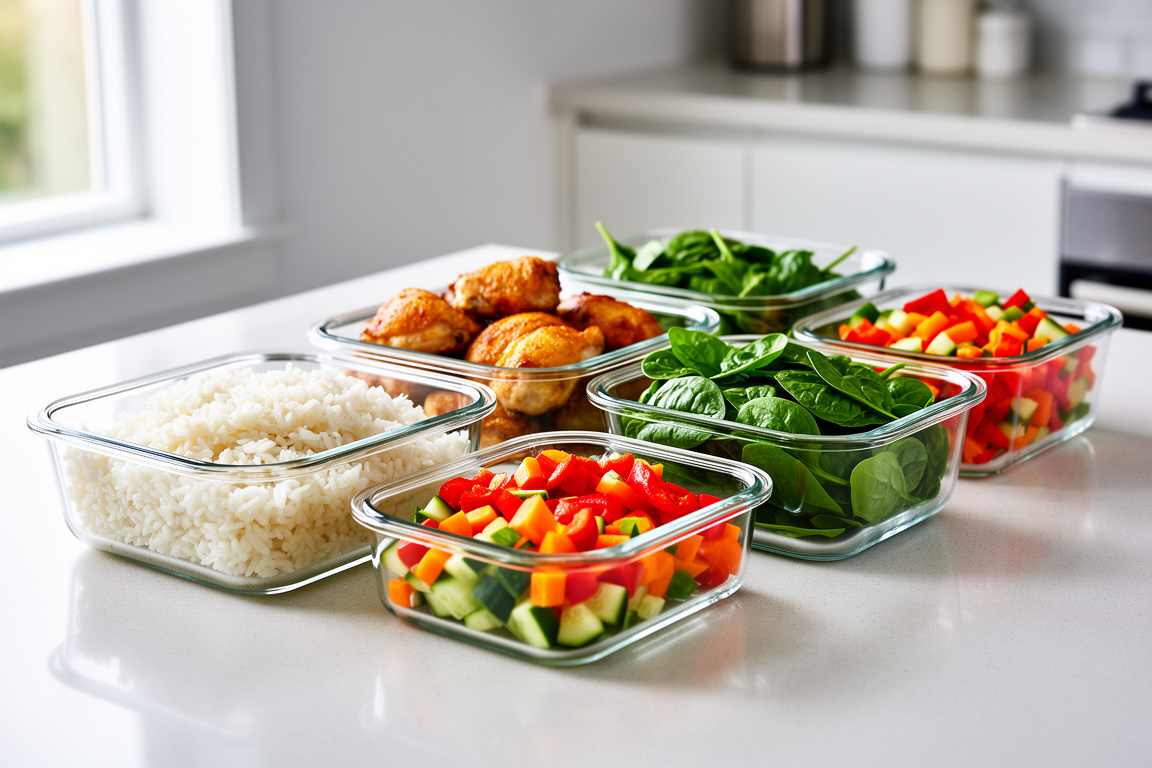
- A protein that stretches. Roast a batch of chicken thighs. They become a grain bowl one night, a wrap at lunch, and a soup later in the week.
- A vegetable you buy once. A bag of spinach works in eggs, a pasta, and a smoothie.
- A carb base. Cook extra rice or potatoes once and reuse them.
When two recipes share an ingredient, you buy the larger pack with confidence instead of guessing. This is also where scaling matters: if you adjust a recipe to make four servings instead of two, the ingredient amounts should scale cleanly so your shopping quantities stay accurate.
A simple shared-ingredient week
| Day | Dinner | Shared ingredient |
|---|---|---|
| Monday | Chicken rice bowl | Chicken, rice |
| Tuesday | Veg stir-fry | Rice, spinach |
| Wednesday | Chicken wrap | Chicken |
| Thursday | Lentil soup | Spinach |
| Friday | Leftovers night | — |
Five dinners, and most of the shopping overlaps. That is the whole idea.
Prep ahead without cooking everything at once
Meal prep does not mean eating five identical containers. It means doing the slow, repeatable tasks once so weeknights are fast.
Good things to prep in advance:
- Cook grains and let them cool before refrigerating.
- Roast or grill a batch of protein.
- Wash and chop sturdy vegetables like carrots, peppers and onions.
- Make one sauce or dressing that works across several meals.
Keep food safety in mind. Cook poultry to an internal temperature of 165°F (74°C) and ground meat to 160°F (71°C). Refrigerate cooked food within two hours, or within one hour if the room is above 90°F (32°C). Most cooked leftovers keep safely in the fridge for three to four days, which is exactly why a seven-day plan usually needs a mid-week cook rather than one giant Sunday session. If you want a worked example built around this rhythm, see this practical weekly meal prep guide.
Using a weekly meal plan generator
Doing all of the above by hand works, but it is fiddly. This is where a weekly meal plan generator earns its place: you give it your constraints and it returns a balanced week instead of a blank page.
In Recipia, you set your dietary preference, such as halal, vegetarian, vegan, gluten-free, keto or dairy-free, along with your goal and a daily calorie target. It generates a week of meals that fits those inputs, with approximate calories and macros shown per serving so you can see how each day adds up. Those nutrition figures are estimates, not lab-tested values, and they shift with your exact ingredients and portion sizes, so treat them as a guide rather than a guarantee.
From plan to shopping list
A plan is only half the job. The part that actually saves time is turning seven days of recipes into one consolidated list of what to buy.
Recipia builds a shopping list from the recipe ingredients in your plan, so overlapping items are gathered together instead of scattered across pages. You can also change the number of servings on any recipe and every ingredient amount scales with it, which keeps your quantities honest when you are cooking for one or for a family.
If you cook from recipes you have found online, you can bring those into one place too. Paste a recipe link and Recipia reads the page; if a site blocks that, paste the text or upload a photo instead. Keeping your go-to meals in a personal library makes next week's plan faster, and this guide on how to save recipes from websites in one place covers the habit in more detail.
Put it all together
A strong weekly plan is not complicated, it is just deliberate. Set a goal and a calorie target. Split those calories across meals. Balance easy days against ambitious ones. Reuse a small set of ingredients so shopping is tight and waste is low. Prep the slow tasks ahead, and respect basic food-safety timing. Finish with one shopping list you can actually follow.
Do that for a few weeks and planning stops feeling like a chore. You learn which meals you repeat happily, which prep steps are worth it, and how your calorie target feels in practice.
Try it in Recipia
Ready to skip the blank page? Set your preference, goal and calorie target, generate a week of meals with calories and macros per serving, and get a shopping list that follows. Try Recipia free.
Frequently asked questions
How many calories should a weekly meal plan target each day?
It depends on your age, weight, height, activity level and goal, so the number is personal and only ever approximate. A good starting point is a calculated daily budget, then split roughly a quarter to breakfast and the rest across lunch, dinner and snacks.
How do I stop buying ingredients I only use once?
Build the week around a small core of shared ingredients. Pick one or two proteins, a vegetable or two, and a carb base, then plan meals that reuse them in different forms so you buy larger quantities with confidence.
How long do prepped meals stay safe in the fridge?
Most cooked leftovers keep safely for three to four days when refrigerated within two hours of cooking. Because of that limit, a seven-day plan usually needs a mid-week cook rather than preparing everything in one session.
Are the calorie and macro figures in a meal plan accurate?
They are estimates that vary with your exact ingredients and portion sizes, not lab-tested values. Use them as a helpful guide, and consult a doctor or registered dietitian if you have a health condition or specific medical goal.
Can a meal plan generator make a shopping list for me?
Yes. Recipia builds a shopping list from the recipe ingredients in your generated plan, gathering overlapping items together, and ingredient amounts scale when you change the number of servings.