Authentic Chicken Karahi Recipe (Pakistani Style)
By the Recipia team · · 6 min read
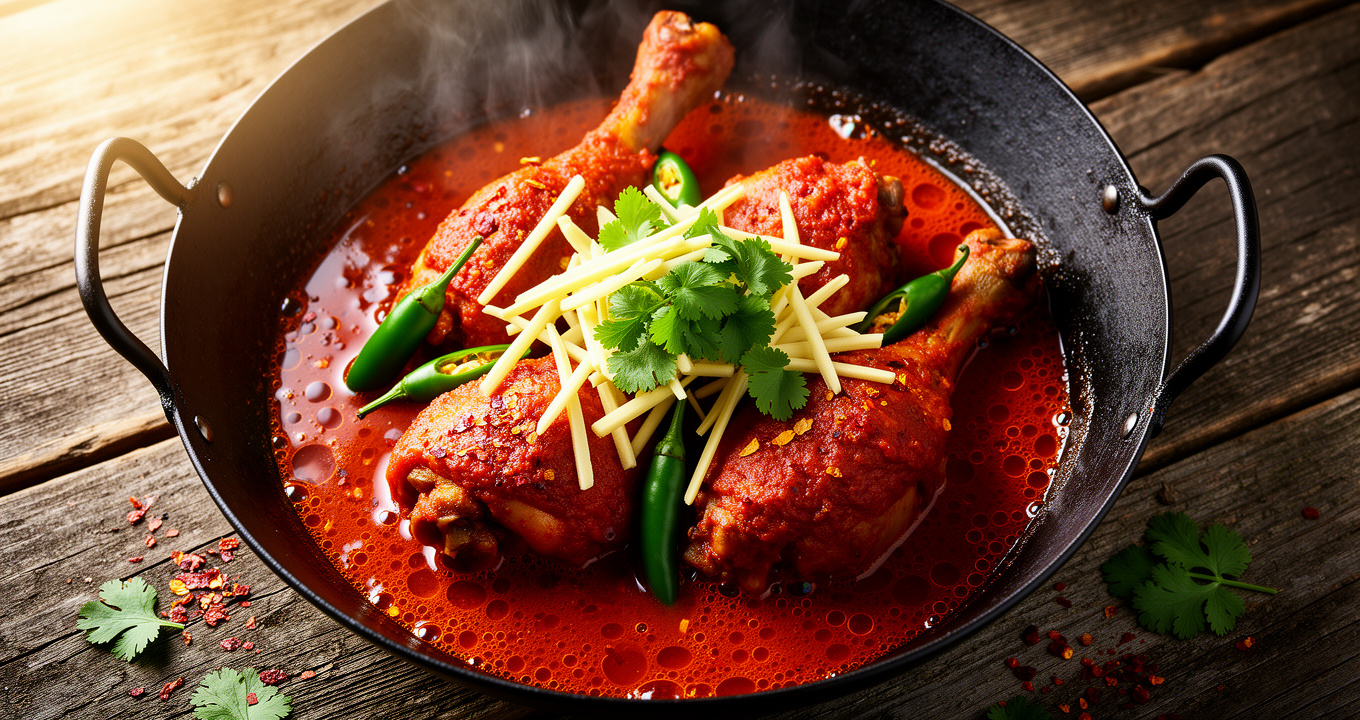
Chicken karahi is one of Pakistan's most loved dishes: bone-in chicken cooked fast and hot in a wide wok with tomatoes, ginger, green chilies, and a short list of whole spices. This chicken karahi recipe keeps things authentic and simple, with exact amounts and a clear method so you get glossy, bold-flavored chicken clinging to a thick tomato gravy.
The dish is also called "kadai chicken" in parts of India, but the Pakistani dhaba style leans on fewer ground spices, more fresh ginger, and plenty of heat. The goal is a reduced, concentrated sauce, not a thin curry.
What makes a karahi a karahi
The name comes from the cookware: a karahi is a wide, deep, two-handled wok. The shape matters. A wide pan gives you a large surface area so moisture evaporates quickly and the tomatoes break down into a clinging masala rather than a watery soup.
Three things define the flavor:
- Tomatoes that cook down into a thick, oily base.
- Fresh ginger, added both during cooking and as julienned strips at the end.
- Green chilies for clean, sharp heat.
Everything else supports those three. You do not need onions, cream, or a long list of powders. Classic karahi is fast, direct, and intense.
Equipment
A karahi is ideal, but any wide, heavy pan works: a large wok, a cast-iron skillet, or a wide sauté pan. Avoid a tall, narrow pot, which traps steam and gives you boiled chicken instead of fried-then-simmered chicken.
Ingredients for chicken karahi
This serves roughly 4 people with rice or naan. Amounts are a reliable starting point; adjust chili to taste.
| Ingredient | Amount |
|---|---|
| Bone-in chicken, cut into pieces | 1 kg (about 2.2 lb) |
| Tomatoes, ripe | 500 g (about 4 medium) |
| Neutral oil or ghee | 1/2 cup |
| Fresh ginger | 2-inch piece |
| Garlic cloves | 8, crushed |
| Green chilies | 4 to 6 |
| Cumin seeds | 1 tsp |
| Coriander seeds, crushed | 1 tbsp |
| Red chili powder | 1 tsp (to taste) |
| Black pepper, coarsely ground | 1/2 tsp |
| Salt | 1.5 tsp, or to taste |
| Garam masala | 1/2 tsp |
| Fresh coriander (cilantro) | a handful |
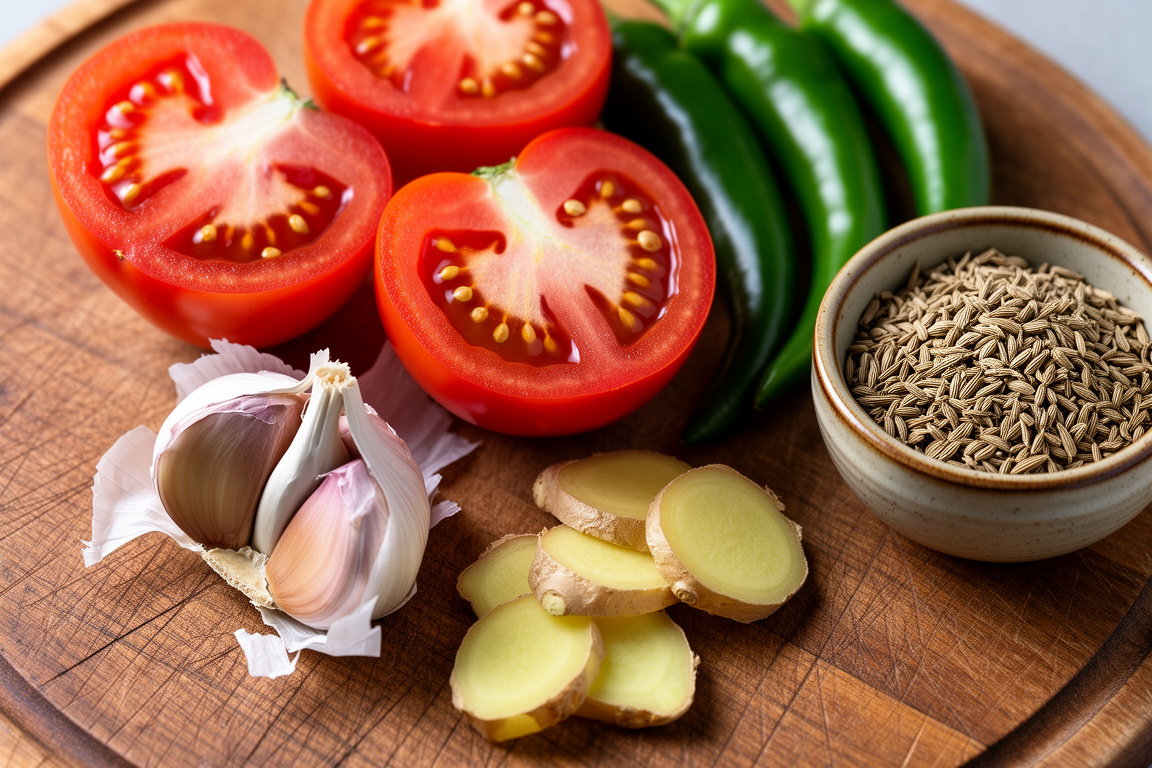
Use bone-in, skinless chicken for the best flavor; the bones add depth as the sauce reduces. Cut the ginger in two: half crushed into the cooking, half sliced into thin julienne to finish.
Step-by-step method
Karahi comes together quickly once you start, so prep everything first. Crush the garlic, cut half the ginger into a rough paste and half into julienne, slit the green chilies, and quarter the tomatoes.
1. Sear the chicken
Heat the oil in your wide pan over high heat. Add the chicken and crushed garlic. Fry on high for 5 to 7 minutes, stirring, until the chicken loses its raw color and the edges catch some golden spots. This early sear builds flavor.
2. Add the tomatoes
Add the quartered tomatoes and the crushed ginger. Stir, then cover and cook for about 8 to 10 minutes. The tomatoes will soften and release their juice, which steams the chicken through. Resist adding water: the tomatoes supply the moisture.
3. Open, reduce, and fry the masala
Remove the lid. Now turn the heat back to high and let the liquid cook off. As it reduces, mash the softened tomato pieces against the side of the pan or pull off the skins if you prefer a smoother base. Add the cumin, crushed coriander, red chili powder, black pepper, and salt.
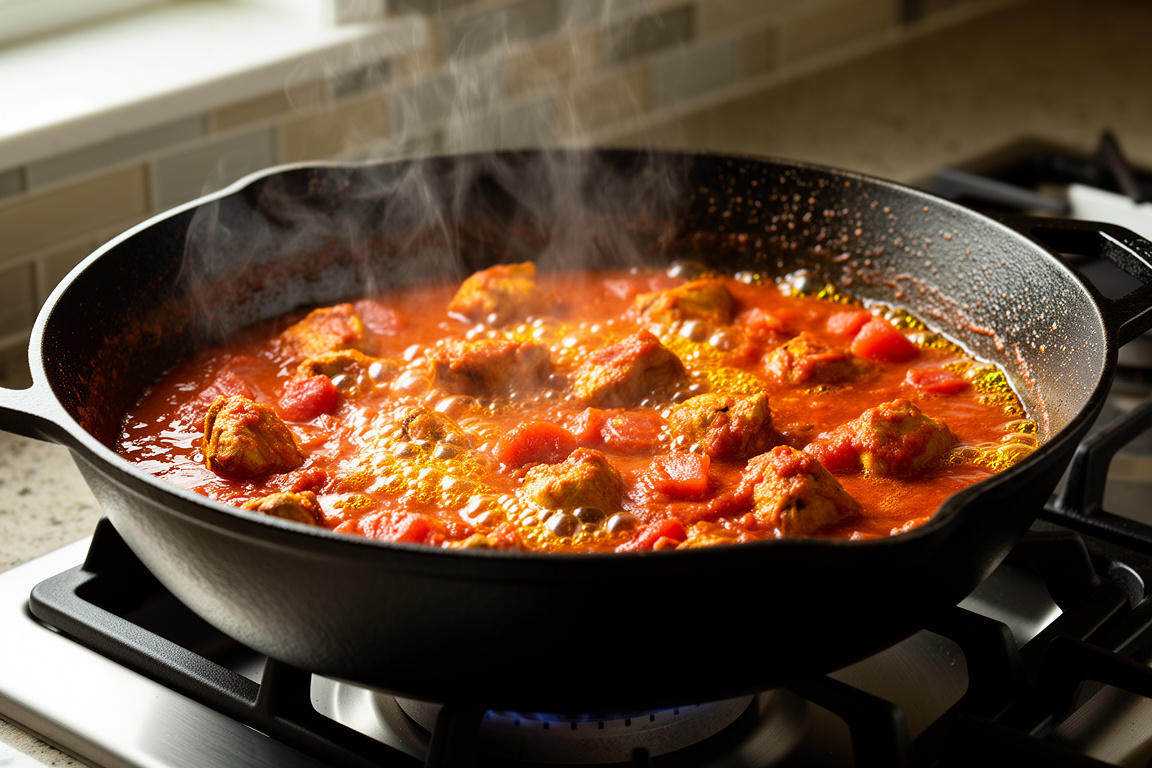
Keep stirring and frying. This is the most important stage: you are "bhunno-ing" the masala, cooking it until the oil separates and rises to the surface. That visible oil at the edges is the signal that the base is done. It usually takes 8 to 12 minutes.
4. Check the chicken and season
By now the chicken should be tender and cooked through. For food safety, chicken is done when it reaches an internal temperature of 74°C (165°F). If it needs a few more minutes, cover briefly; if the sauce is too thick to simmer, add a small splash of hot water.
Stir in the garam masala. Taste and adjust salt and chili.
5. Finish
Scatter the julienned ginger, the slit green chilies, and fresh coriander over the top. Give it one gentle stir, cover, and let it rest off the heat for 2 to 3 minutes so the fresh ginger and chili perfume the dish. Serve straight from the pan with naan, roti, or plain rice.
Tips for the tomato-and-ginger base
The base is where most karahi goes wrong. A few habits fix that.
- Use ripe tomatoes. Pale, firm tomatoes stay watery and sour. Ripe ones break down and sweeten as they cook.
- Reduce fully. The gravy should coat the chicken, not pool around it. If you see thin liquid, keep the heat high and keep cooking.
- Wait for the oil to separate. This is the clearest sign the masala is properly fried. Do not rush past it.
- Ginger twice. Cooking ginger adds warmth; raw julienne on top adds brightness and a little bite. Both matter.
- Salt at the masala stage, not at the start, so you can taste the real balance once the tomatoes have reduced.
Controlling the heat
"Heat" here means two things: the stove and the chili.
For the stove, karahi is a high-heat dish from start to finish, apart from the covered tomato-steaming step. High heat sears the chicken and drives off water so the sauce thickens.
For the chili, you have levers:
- Green chilies give fresh, sharp heat. Slit them whole for aroma with less fire, or chop them for more.
- Red chili powder gives background heat and color. Start with 1 teaspoon and build.
- To cool it down without losing flavor, remove the seeds from the green chilies, or stir in a spoon of plain yogurt at the end (note this makes the style slightly richer and less classic).
Serving, storing, and nutrition
Serve chicken karahi hot with naan, tandoori roti, or basmati rice. A side of sliced onion, lemon wedges, and a simple cucumber-mint raita rounds out the meal.
Leftovers keep in the fridge for 3 to 4 days in a sealed container. Reheat gently with a splash of water to loosen the sauce. Cooked chicken also freezes well for up to 3 months.
As an approximate guide, a quarter of this recipe lands somewhere around 450 to 550 calories, driven mainly by the oil and the chicken. Exact numbers vary a lot with how much oil you use, whether you use skin-on chicken, and your portion size, so treat any figure as an estimate rather than a precise count. If you are managing a health condition or a specific diet, check with a qualified professional. To trim calories, reduce the oil to 1/4 cup and use skinless pieces.
If you like cooking by the numbers, you can estimate macros for your own version using the approach in our guide on how to use a recipe nutrition calculator by hand, or lean into leaner swaps with these macro-friendly recipes with calories.
Cook it step by step without the scroll
Reading a recipe and cooking it are two different jobs. Karahi moves fast, and flipping back up the page mid-sear is exactly when the masala catches. A step-by-step cooking app helps here by showing one instruction at a time.
In Recipia's guided cook mode, each step appears on its own, and any step that mentions a time starts a timer automatically, so the 8-to-10-minute covered simmer tracks itself. You can also scale the recipe up for a bigger table and every ingredient amount adjusts, and translate the full method into Urdu, Hindi, or another language if someone in the kitchen prefers it.
Try it in Recipia
Load this chicken karahi into Recipia, scale it to your table, and cook it hands-free in guided mode with timers that start themselves. Try Recipia free and keep your favorite recipes in one place.
Frequently asked questions
What cut of chicken is best for chicken karahi?
Bone-in, skinless pieces are traditional and give the best flavor, since the bones add depth as the sauce reduces. Boneless thighs work too and cook faster, but the sauce will be slightly less rich.
Why is my karahi watery instead of thick?
The tomatoes were not reduced enough, or the heat was too low. Keep the pan uncovered on high heat and keep frying until the liquid cooks off and oil separates and rises to the surface.
Can I make chicken karahi less spicy?
Yes. Remove the seeds from the green chilies, cut the red chili powder, and slit the chilies whole rather than chopping them. A spoon of plain yogurt stirred in at the end also softens the heat, though it makes the dish a little richer than the classic style.
Do I need a real karahi pan to make it?
No. Any wide, heavy pan works, such as a large wok, cast-iron skillet, or wide saute pan. The key is a wide surface so moisture evaporates quickly; avoid tall, narrow pots that trap steam.
What is the difference between chicken karahi and kadai chicken?
They are closely related. Pakistani karahi typically uses fewer ground spices, more fresh ginger, and sharper green-chili heat, while kadai chicken often includes capsicum and a dedicated spice blend. Both are cooked in a wide wok.